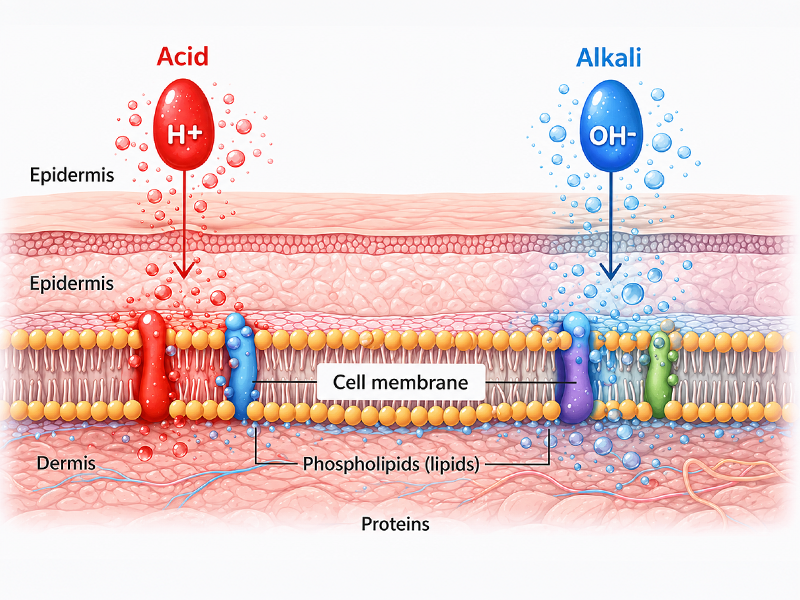
Photo source: The image was generated using AI
What can happen?
Acids (H⁺):
- Lower pH
- Proteins can denature (change shape) and coagulate
- Can damage cells and tissue
- Severe exposure can reach the dermis
Alkali (OH⁻):
- Higher pH
- Can break down proteins and lipids
- Often penetrate deeper into the skin
- Severe exposure can reach the dermis
The first step in a chemical accident is identifying the substance if possible.
Questions to consider:
- Is the substance an acid or an alkali?
- What is the name of the product or chemical?
- Is safety information or a safety data sheet (SDS) available?
Acids
Acids can damage the surface of the skin or eye by affecting the proteins in the cells. The damage often stays closer to the surface, although it can still be serious and painful. One important exception is hydrofluoric acid: although classified as an acid, it behaves more like an alkali because its small fluoride ion penetrates deep into tissue, and significant exposure can also cause life-threatening systemic effects (low blood calcium and magnesium).
Alkalis
Alkalis can break down the protective structure of the cells, allowing the chemical to penetrate deeper into the tissue. Because of this, alkali injuries are often more severe and may continue to develop even after the first contact.
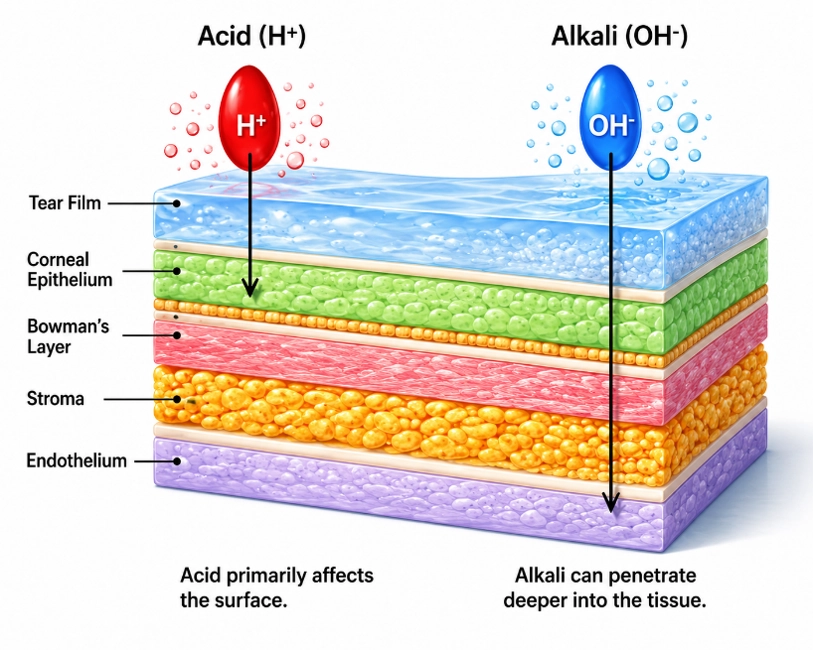
Photo source: The image was generated using AI
Symptoms vary depending on the chemical and severity of exposure.
Eye exposure may cause:
- Pain or burning sensation
- Redness
- Excessive tearing
- Blurred vision
- Sensitivity to light
- Swelling

Chemical injury at eye
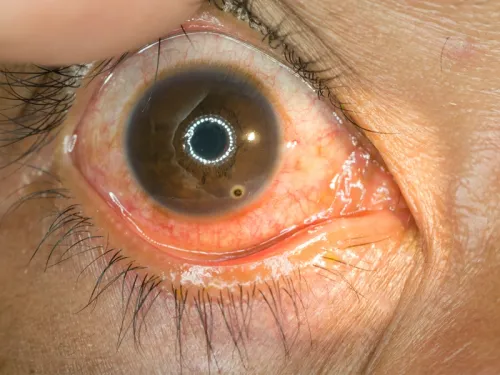
Metallic foreign body at eye
Skin exposure may cause:
- Redness or irritation
- Burning sensation
- Blisters
- Tissue damage
- Discoloration or whitening of the skin
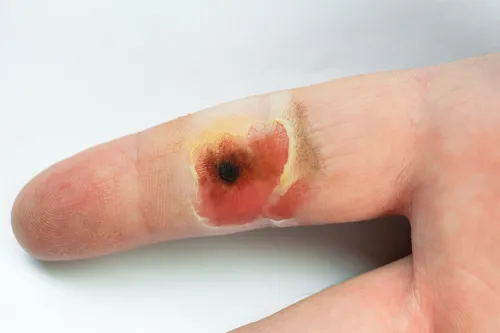
Skin damage by acids and alkalis
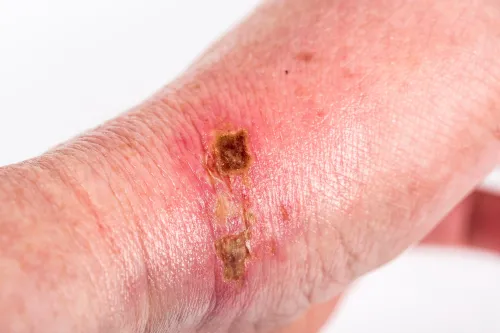
Chemical burn with sodium hydroxide (alkali) also known as caustic soda
Chemical damage continues as long as the substance remains in contact with tissue. The faster chemicals are diluted/neutralized or removed, the lower the risk of severe injury.
Rapid rinsing can help:
- Dilute/neutralize the chemical
- Reduce penetration into tissue
- Limit damage to proteins and cell membranes
- Improve the chance of recovery
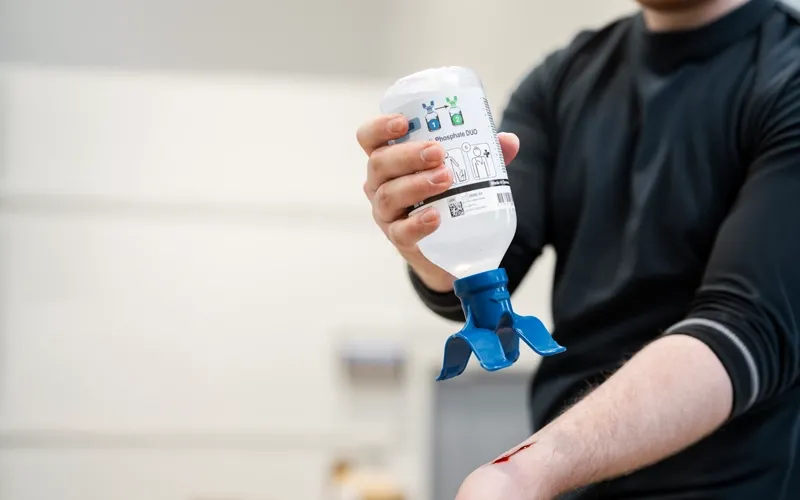
The correct wound and eyewash solution should be easily accessible in areas where chemical exposure may occur.
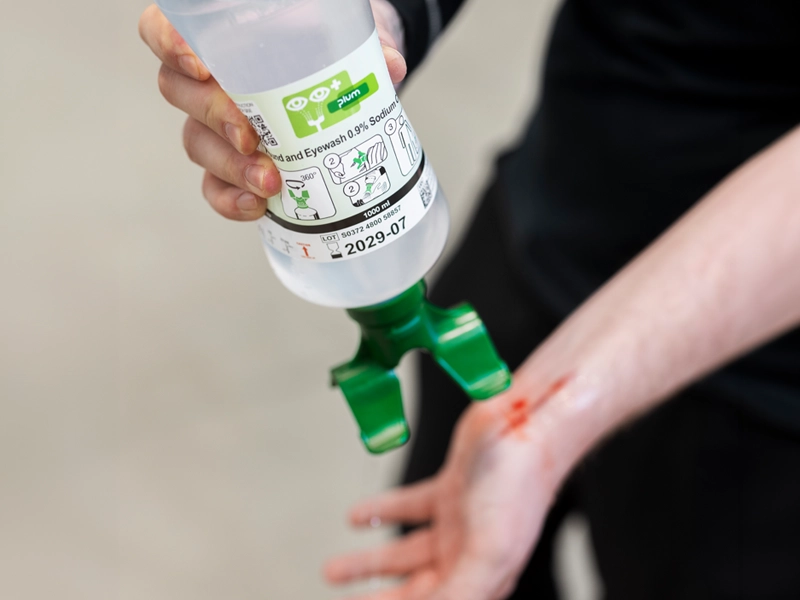
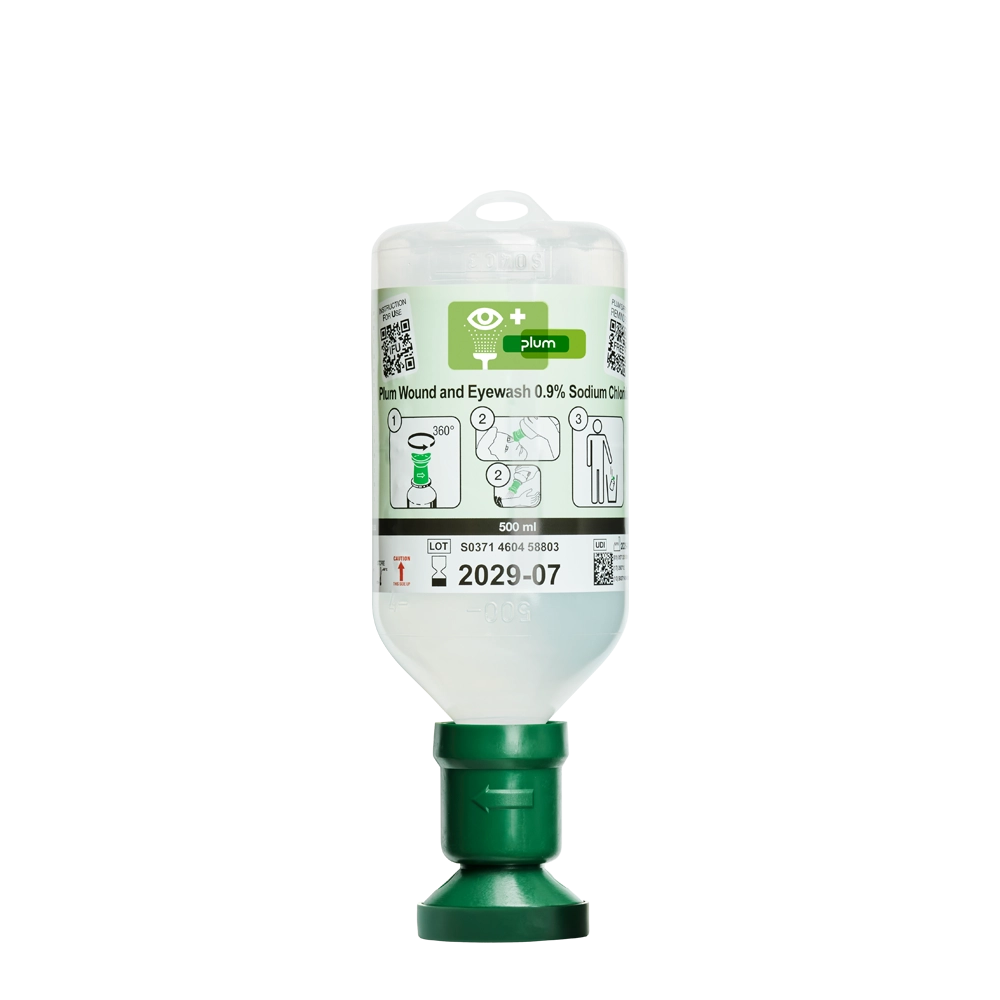
When to use saline solution
Plum Wound and Eyewash 0.9% Sodium Chloride is recommended for:
- Dust or dirt in the eye
- Foreign objects
- Minor wound cleansing
- General flushing of particles from skin or eyes
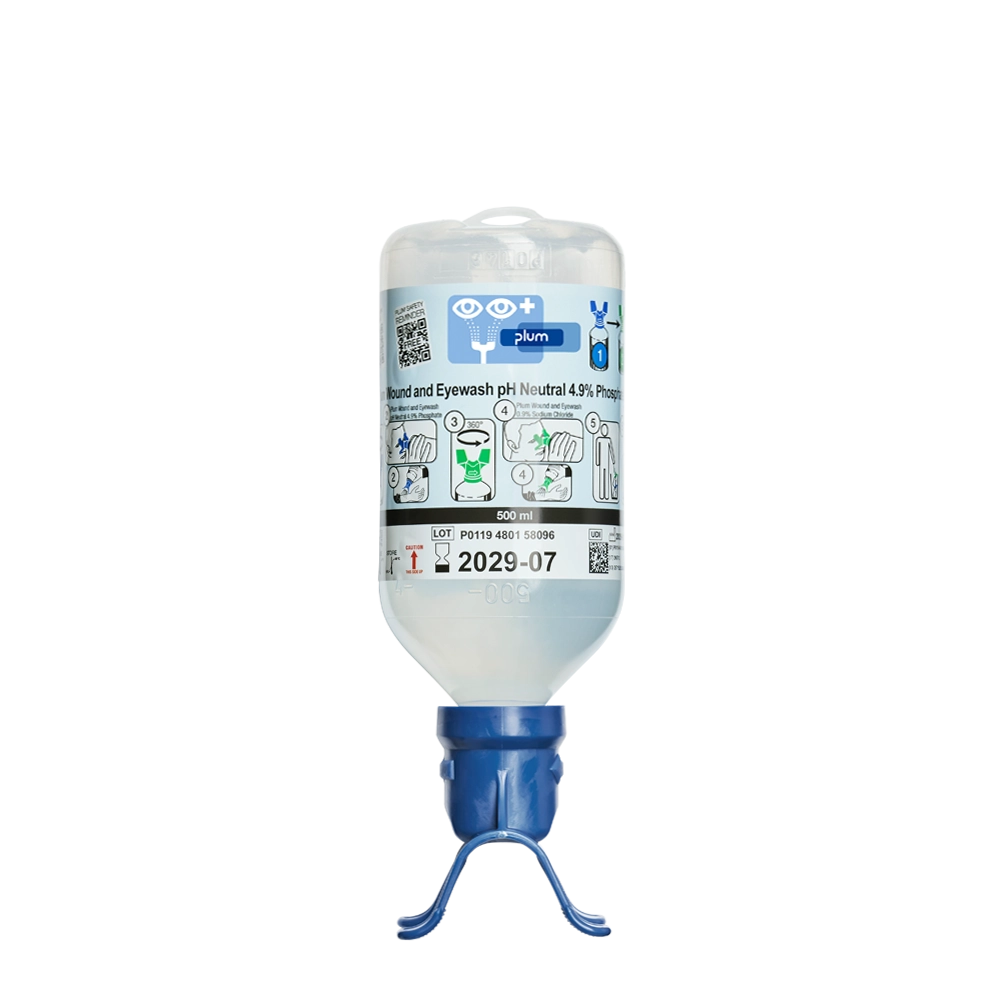
When to use pH neutral solution
Plum Wound and Eyewash pH Neutral 4.9% Phosphate is recommended for:
- Exposure to acids
- Exposure to alkalis
- Situations where rapid pH neutralization is important
The phosphate buffer helps bring the pH closer to normal levels and may reduce ongoing chemical reactions in the tissue.