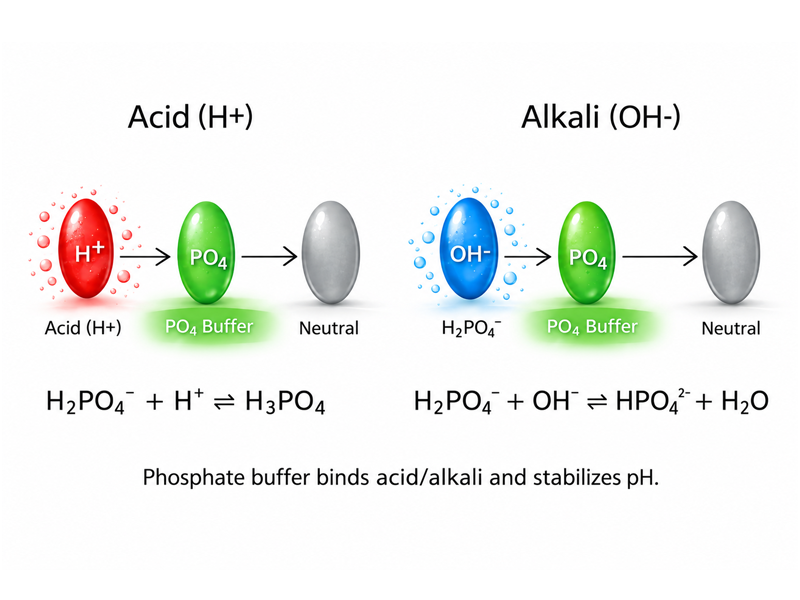
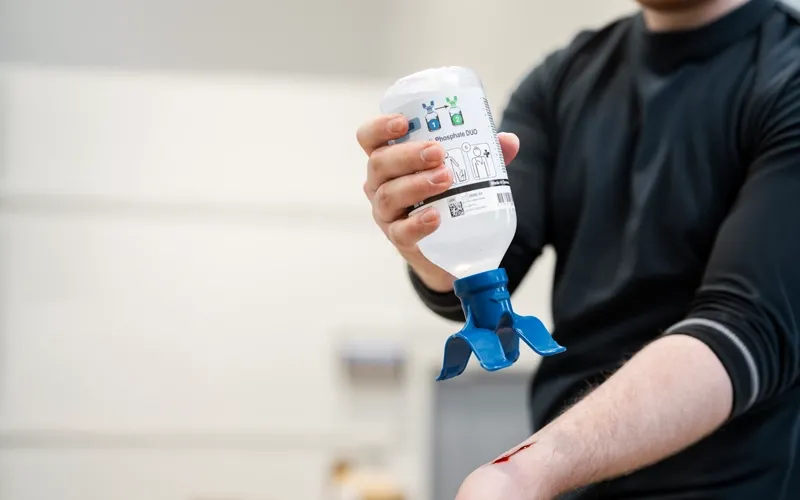
The surface of the eye, particularly the cornea, consists of several layers of living cells. Each cell is surrounded by a cell membrane composed primarily of phospholipids and proteins. The cell membrane acts as a protective barrier that regulates which substances can enter and leave the cell.
For cells to function normally, the surrounding environment must remain stable. Tear fluid normally has a pH of approximately 7.3–7.4, which is close to neutral.
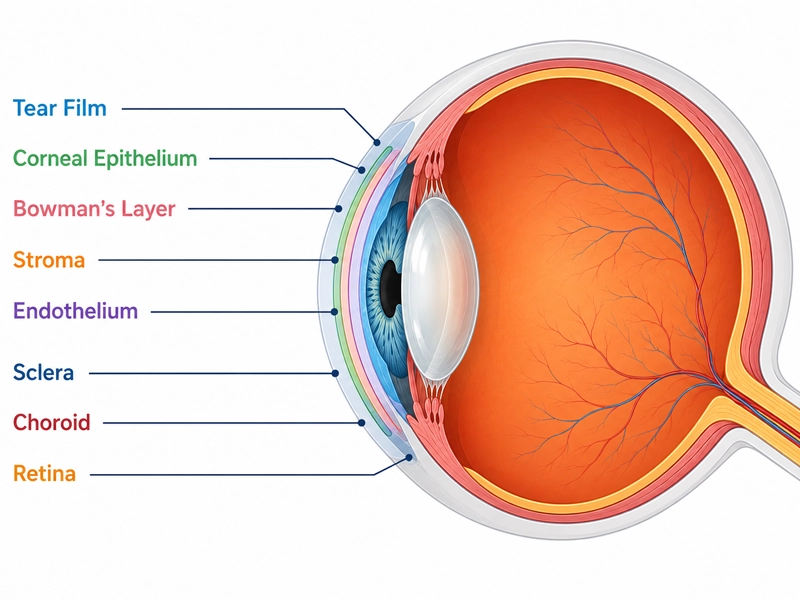
Photo source: The image was generated using AI
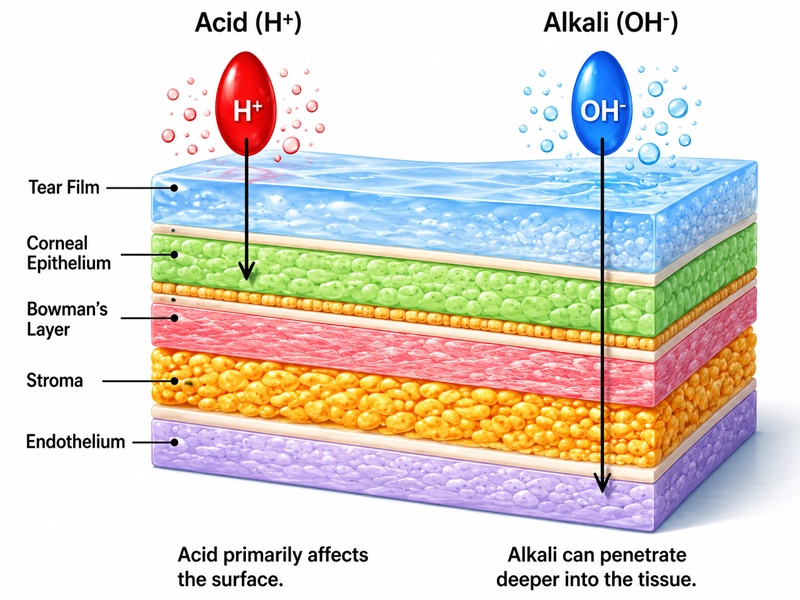
Photo source: The image was generated using AI
Acid injuries to the eye
When an acid comes into contact with the eye, it releases hydrogen ions (H⁺), which react with proteins in the cell membranes and surrounding tissue. These hydrogen ions can alter the three-dimensional structure of proteins, causing them to lose their normal function. This process is known as protein denaturation.
As proteins denature, the cell membrane becomes less stable and more permeable. Cells may begin to lose water and ions, resulting in irritation and tissue damage.
Acid injuries are often more superficial because the proteins coagulate, forming a barrier that can partially limit further penetration of the acid into deeper tissue.
Eye damage caused by en acid:
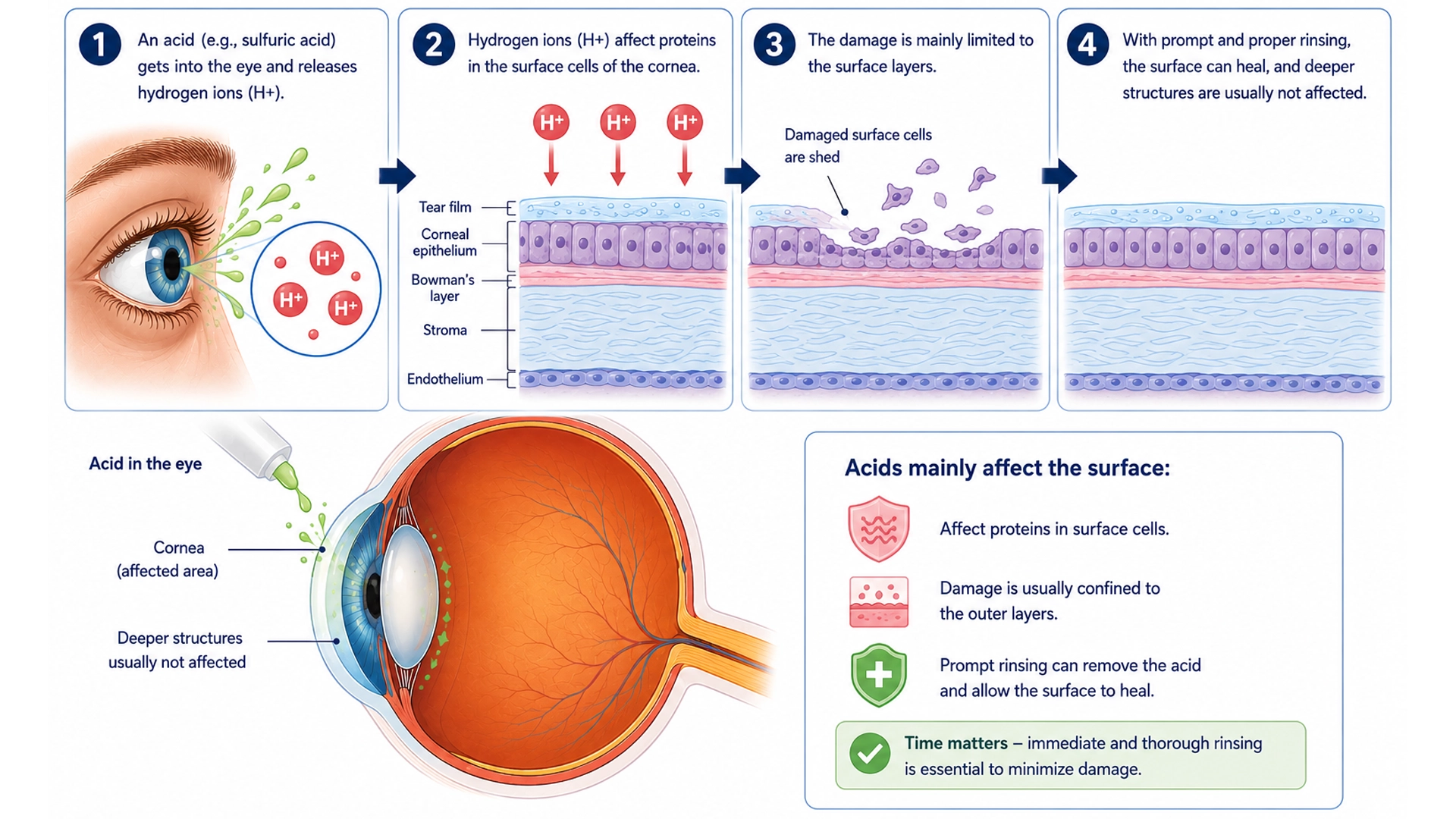
Photo source: The image was generated using AI
Alkali injuries to the eye
Alkalis release hydroxide ions (OH⁻), which primarily react with the lipids in the cell membrane. Because the membrane consists largely of phospholipids, hydroxide ions can break it down through a process similar to soap formation, known as saponification.
As the cell membrane dissolves, cells lose their protective structure. At the same time, the tissue becomes more permeable, allowing the alkali to penetrate deeper into the cornea and other structures of the eye.
For this reason, alkali injuries are often more severe and may progress rapidly.
Eye damage caused by en alkali:
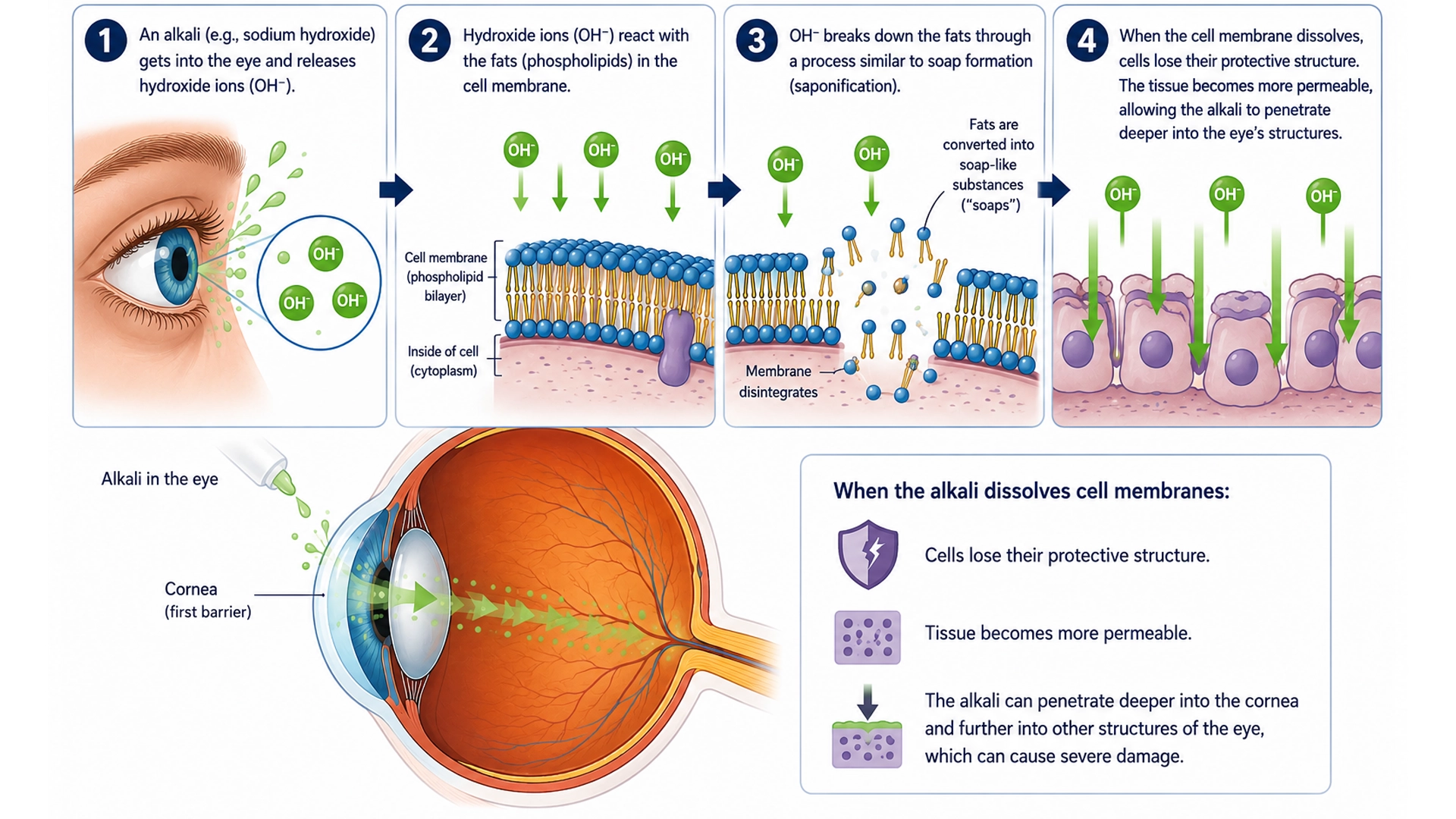
Photo source: The image was generated using AI
Eye injuri with chemicals

Chemicals can penetrate the eye in the form of a solid, liquid or gas.
- Acids – primarily damage cellular proteins and often not so deep in the tissue.
- Alkalis – often cause deeper injuries with scarring as a result.
Eye injuri with foreign body
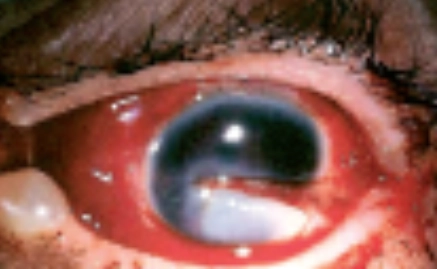
Many eye injuries are caused by mechanical influences, primarily foreign bodies.
Even ‘minor’ eye injuries can cause life-long vision problems and suffering.
Damage to the cell membrane
At the molecular level, cells are composed of proteins, lipids, and water. Hydrogen ions released by acids can alter the structure of proteins, while hydroxide ions released by alkalis break down the lipids that make up the cell membrane.
When this occurs, the cell loses its protective barrier, making it increasingly vulnerable to further chemical damage.
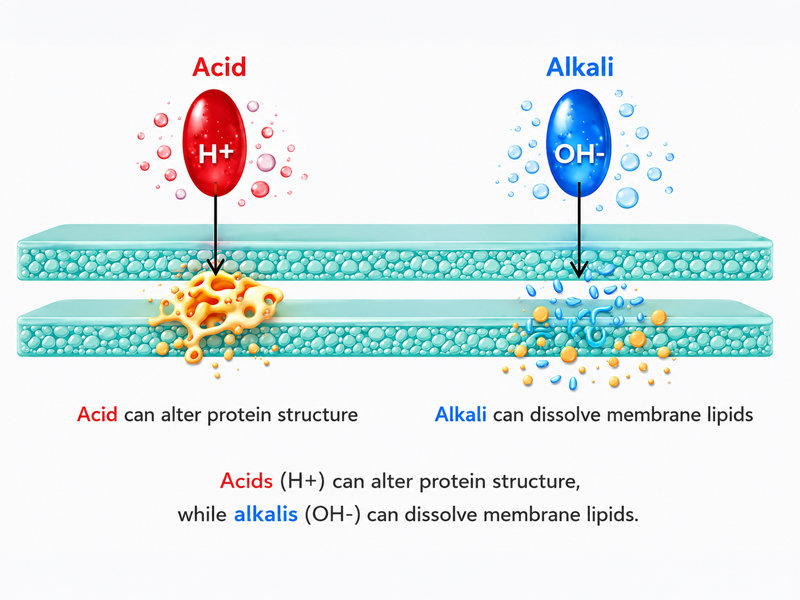
Photo source: The image was generated using AI
Chemical injuries to the skin
The skin consists of several layers, including the epidermis and dermis. Like the cells of the eye, skin cells are surrounded by cell membranes composed of phospholipids and proteins.
The surface of healthy skin normally has a pH of approximately 4.5–5.5. This slightly acidic environment, known as the acid mantle, helps protect the skin against chemical exposure and microorganisms.
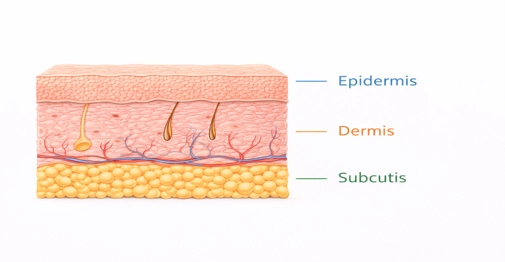
Photo source: The image was generated using AI
Acid Injuries to the skin
Acids primarily affect proteins within skin cells. Hydrogen ions can alter the structure of proteins, leading to denaturation and coagulation.
As proteins coagulate, they may form a firmer layer within the tissue that partially limits further penetration of the acid. Consequently, acid injuries are often more superficial, although they can still be severe and painful.
Alkali Injuries to the skin
Alkalis react with the lipids in cell membranes and dissolve the membrane structure through saponification. As the cell membranes are destroyed, the tissue loses its protective barrier.
The alkali can then penetrate deeper into the skin, continuing to break down both proteins and lipids. Consequently, alkali injuries are often deeper and more severe than acid injuries.
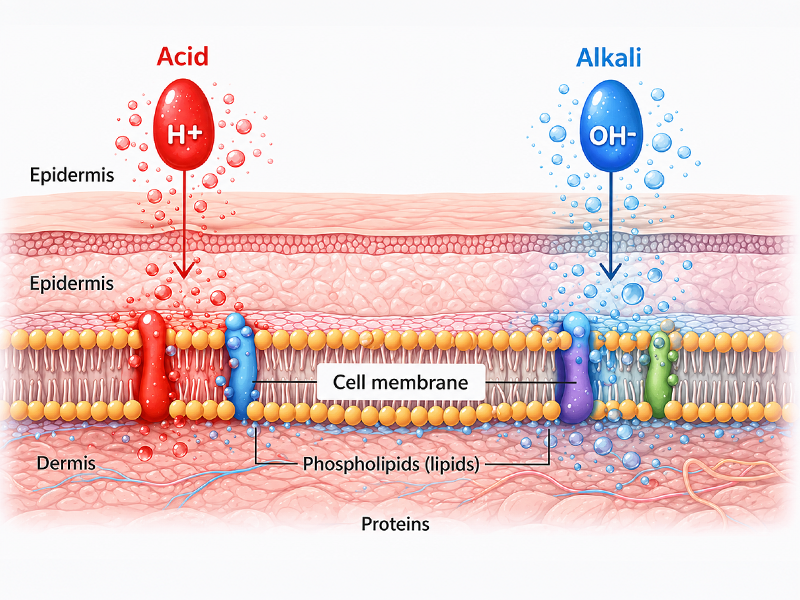
Photo source: The image was generated using AI
When a strong acid or alkali comes into contact with the skin or eye, the tissue is affected not only chemically. Changes also occur in osmosis, ion balance, and fluid pressure at the cellular level. These processes can worsen tissue damage and influence how deeply the chemical penetrates.
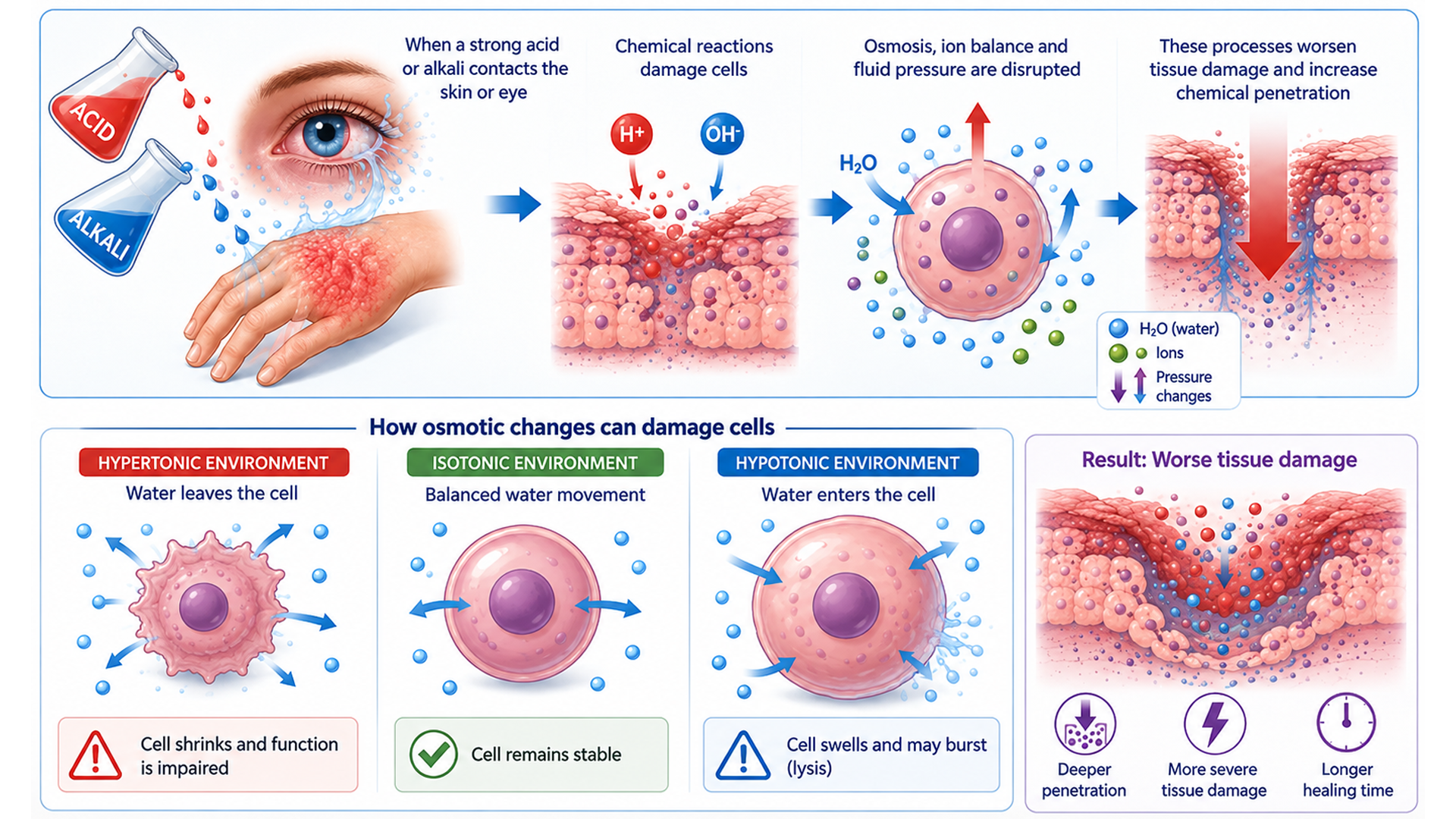
Photo source: The image was generated using AI
The eye is particularly sensitive to changes in osmosis and pressure because its fluid balance is tightly regulated. These fluids normally have an osmolarity of approximately 300 mOsm/L.
When an acid or alkali enters the eye:
- Ion concentration changes
- Osmolarity changes
- Water begins to move between tissues and fluids
This may result in:
- Corneal oedema
- Changes in intraocular pressure
- Reduced corneal transparency
If corneal cells swell, light is scattered differently through the tissue, leading to blurred vision.